
The climate blind spot
A case for taking a closer look at methane
An untapped opportunity
The political debate over oil and gas drilling in the North Sea is intensifying.
In an increasingly volatile geopolitical environment, repeated shocks to global oil and gas markets have refocused attention on the UK’s domestic energy supply.
Some argue drilling for more North Sea oil and gas is the way to increase UK energy security and has less climate impact than importing gas.
But what’s the truth?
There isn’t much gas left. Two thirds of the fossil fuel left in the North Sea is oil, and most is exported because it’s of the wrong type for UK refineries to process.
UK oil and gas production isn’t low emission. It leaks significant amounts of methane which is consistently underestimated.
Tackling methane leakage is an untapped opportunity to recover more usable natural gas, which is mostly methane. This would reduce the need for additional extraction, increase the government's tax take, and slow global warming.
Emissions are higher than stated
Evidence is mounting that greenhouse gas emissions from North Sea oil and gas are underestimated and underreported.
Companies usually report estimates of flared, vented and leaked gases to the regulator, and aren’t required to directly measure these or get third party verification.
The true volume of emissions isn’t known but is likely to be a lot higher than official records state.
Independent estimates change the picture, increasing the UK’s methane emissions intensity by three to five times.
This makes emissions much higher than gas piped from Norway, which provides most of the UK’s gas imports, and possibly higher than Norwegian LNG. Emissions in Norway may also be underestimated, but this is less likely due to its long history of better industry practices.
The claim that domestic fossil fuels are cleaner than imports doesn’t stand up to scrutiny.
This chart shows emission intensity, which is a measure of how dirty the source of gas is.


Emissions are higher than stated
Evidence is mounting that greenhouse gas emissions from North Sea oil and gas are underestimated and underreported.
Companies usually report estimates of flared, vented and leaked gases to the regulator, and aren’t required to directly measure these or get third party verification.
The true volume of emissions isn’t known but is likely to be a lot higher than official records state.
Independent estimates change the picture, increasing the UK’s methane emissions intensity by three to five times.
This makes emissions much higher than gas piped from Norway, which provides most of the UK’s gas imports, and possibly higher than Norwegian LNG. Emissions in Norway may also be underestimated, but this is less likely due to its long history of better industry practices.
The claim that domestic fossil fuels are cleaner than imports doesn’t stand up to scrutiny.
The chart below shows emission intensity, which is a measure of how dirty the source of gas is.
Methane is a superpollutant
Methane is the main component of natural gas. It’s a highly potent greenhouse gas which contributes about a third of global warming (other major sources in the UK are biodegradable waste and animal agriculture).
It also causes air pollution by breaking down into harmful ozone. Prolonged exposure can lead to chronic respiratory disease. Ozone also reduces crop yields, losing up to £1.7 billion a year in value across Europe.
Because of its short lifespan in the atmosphere, cutting methane emissions slows down the rate of global warming. It has been described as the climate ‘emergency brake’.
The UK champions the Global Methane Pledge, promising to reduce methane emissions by 30 per cent by 2030.
The grey line shows how much this would bring down emissions.
However, the UK’s 2025 Methane Action Plan is on course to reduce emissions, at best, by only 21 per cent from 2020 emission levels.
The green line shows this course.
Methane is a superpollutant
Methane is the main component of natural gas. It’s a highly potent greenhouse gas which contributes about a third of global warming (other major sources in the UK are biodegradable waste and animal agriculture).
It also causes air pollution by breaking down into harmful ozone. Prolonged exposure can lead to chronic respiratory disease. Ozone also reduces crop yields, losing up to £1.7 billion a year in value across Europe.
Because of its short lifespan in the atmosphere, cutting methane emissions slows down the rate of global warming. It has been described as the climate ‘emergency brake’.
The UK champions the Global Methane Pledge, promising to reduce methane emissions by 30 per cent by 2030.
The grey line shows how much this would bring down emissions.
However, the UK’s 2025 Methane Action Plan is on course to reduce emissions, at best, by only 21 per cent from 2020 emission levels.
The green line shows this course.
How do oil and gas operators release methane?
Natural gas is released from drilling platforms, pipelines, storage sites and refineries.
The gas is ‘vented’ (released directly into the atmosphere), ‘flared’ (burnt for disposal, though a small amount escapes unburnt), or leaked accidentally (known as ‘fugitive emissions’).
Operators have agreed with the regulator, the North Sea Transition Authority, that they will end routine (ie non-emergency) flaring and venting by 2030, but this isn’t legally binding.
Health and safety law requires operators to detect and fix large leaks but they aren’t required to look for leaks regularly or repair small or moderate leaks, which together can add up to significant emissions.
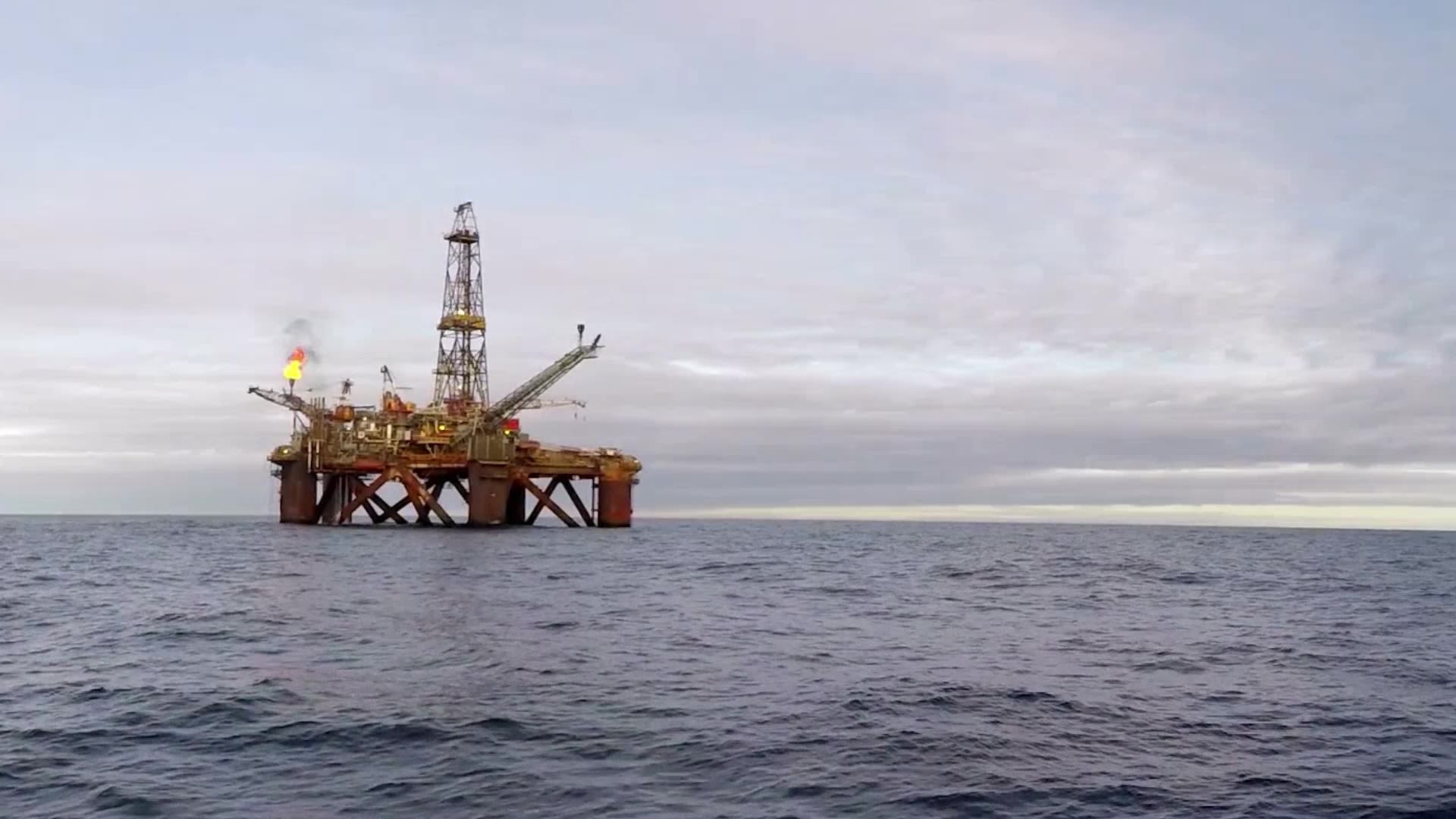
Some emissions are easy to spot.
Flaring accounts for an estimated 29% of methane emissions from UK oil and gas extraction. Some methane escapes unburnt, especially when flares accidentally go out.
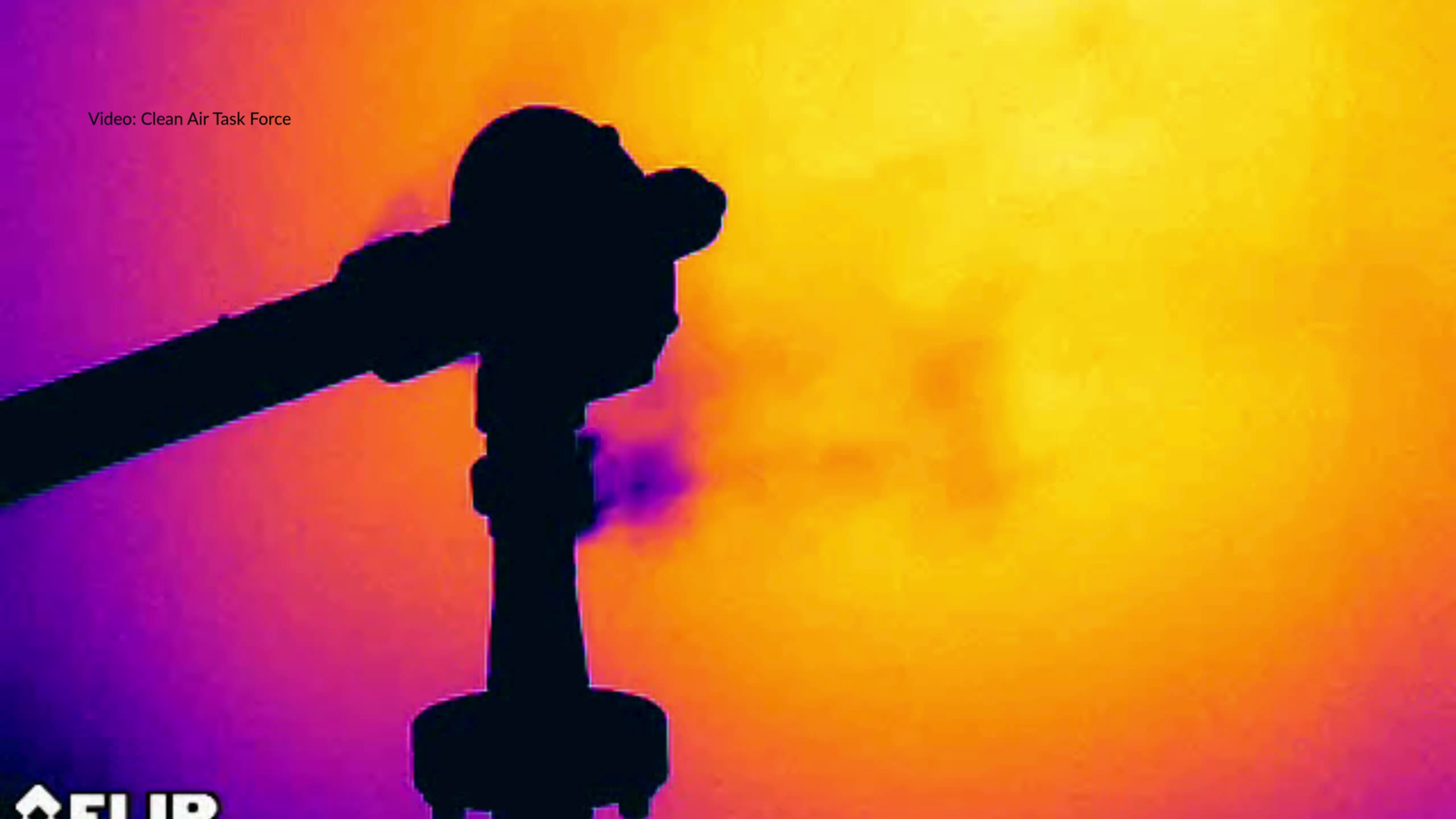
But the majority of methane emissions are hiding in plain sight. Most, you'll never see.
For instance, this is a gas pipe at an onshore oil rig...
... Infrared shows methane escaping through a worn seal or faulty fitting.
Leaks like this are poorly monitored. Official records suggest they account for an estimated 9% of methane emissions from UK oil and gas extraction, but the true figure is likely to be much higher.
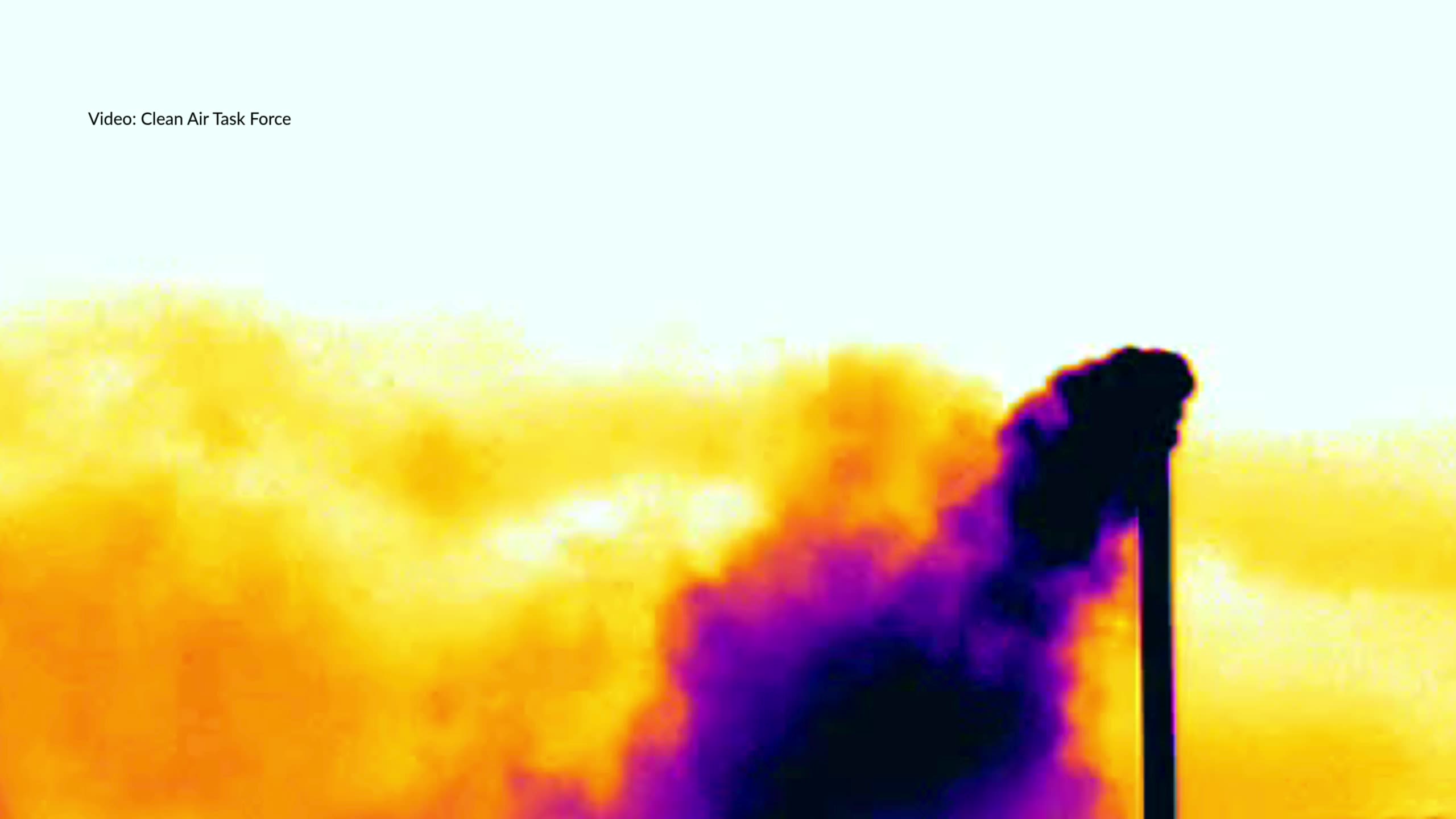
And not all methane escapes by accident.
This is a vent stack on a wellhead. As part of routine operations, the methane gas is deliberately released.
But switch to infrared and the picture changes.
Venting is responsible for an estimated 45% of methane emissions from UK oil and gas extraction.
Methane loss is also wasted energy
Operators are required to report their methane emissions to the North Sea Transition Authority (NSTA) if offshore, and the Environment Agency onshore.
In 2024, records showed that North Sea venting and flaring wasted enough gas to heat at least 570,000 homes.
But, as we know reports are often underestimated, the true amount of wasted energy is likely to be much higher.
It’s not just a North Sea problem.
The Clean Air Task Force observed many instances of methane leaks and venting from onshore oil drilling operations in 2021 and 2024.
Some methane emissions are big enough to be seen from space
Satellites like GHGSat, CarbonMapper and MethaneSAT independently measure methane emissions. At offshore sites this has been difficult, due to light reflecting off the dark surface of the sea. But GHGSat’s new ‘Glint Mode’ has improved the data.
In September 2024, satellite observation of an offshore facility in the North Sea detected methane emissions at around 4.8 tonnes an hour. Satellite coverage is patchy, but if the rate observed in that single detection in 2024 was typical, it is over 120 times more than reported by the operator in recent years.
Another installation emitted 4.3 tonnes an hour in March 2024. If this rate was sustained, it would be 80 to 300 times higher than the annual emissions the operator reported in 2021, 2022 and 2023.
Satellite image of methane emitted from a North Sea offshore drilling platform (2024)
Satellite data collection hasn’t focused on the UK, eg the short lived MethaneSAT mission made no observations of the UK or North Sea and the Carbon Mapper satellite focuses more on the Americas, Middle East and Asia.
GHGSat has more data on the UK, but because drilling operators aren’t required to independently verify their reports, there’s a general lack of demand for UK observations.
Lack of UK data isn’t a sign of lower UK emissions. Better monitoring is essential to fill the gap in knowledge and reporting.
Satellite data collection hasn’t focused on the UK, eg the short lived MethaneSAT mission made no observations of the UK or North Sea and the Carbon Mapper satellite focuses more on the Americas, Middle East and Asia.
Satellite data collection hasn’t focused on the UK, eg the short lived MethaneSAT mission made no observations of the UK or North Sea and the Carbon Mapper satellite focuses on the Americas, Middle East and Asia.
Solving the UK's methane problem
The UK government and the NSTA have agreed to end routine flaring and venting in the North Sea from 2030, although this is voluntary and has no legal underpinning.
There’s no equivalent ambition for onshore operations and it doesn’t deal with the leaks and underestimated emissions.
The best way to cut leaks is with frequent leak detection and repair (LDAR) programmes.
Under the EU’s new Methane Regulation, UK companies exporting to the EU will have to implement robust monitoring and verification programmes, as well as regular LDAR.
An equivalent framework in the UK would make this compliance easier.
We estimate that requiring quarterly LDAR on all offshore and onshore oil and gas sites in the UK could support the equivalent of 100 full time jobs.
US research emphasises that LDAR jobs are well paid with a high chance of upward mobility.
Roles include technicians, environmental engineers and scientists, drone operators and helicopter pilots.
And requiring LDAR would be a growth opportunity for the many UK-based emissions inspection companies.


Solving the UK's methane problem
The UK government and the NSTA have agreed to end routine flaring and venting in the North Sea from 2030, although this is voluntary and has no legal underpinning.
There’s no equivalent ambition for onshore operations and it doesn’t deal with the leaks and underestimated emissions.
The best way to cut leaks is with frequent leak detection and repair (LDAR) programmes.
Under the EU’s new Methane Regulation, UK companies exporting to the EU will have to implement robust monitoring and verification programmes, as well as regular LDAR.
An equivalent framework in the UK would make this compliance easier.
We estimate that requiring quarterly LDAR on all offshore and onshore oil and gas sites in the UK could support the equivalent of 100 full time jobs.
US research emphasises that LDAR jobs are well paid with a high chance of upward mobility.
Roles include technicians, environmental engineers and scientists, drone operators and helicopter pilots.
And requiring LDAR would be a growth opportunity for the many UK-based emissions inspection companies.
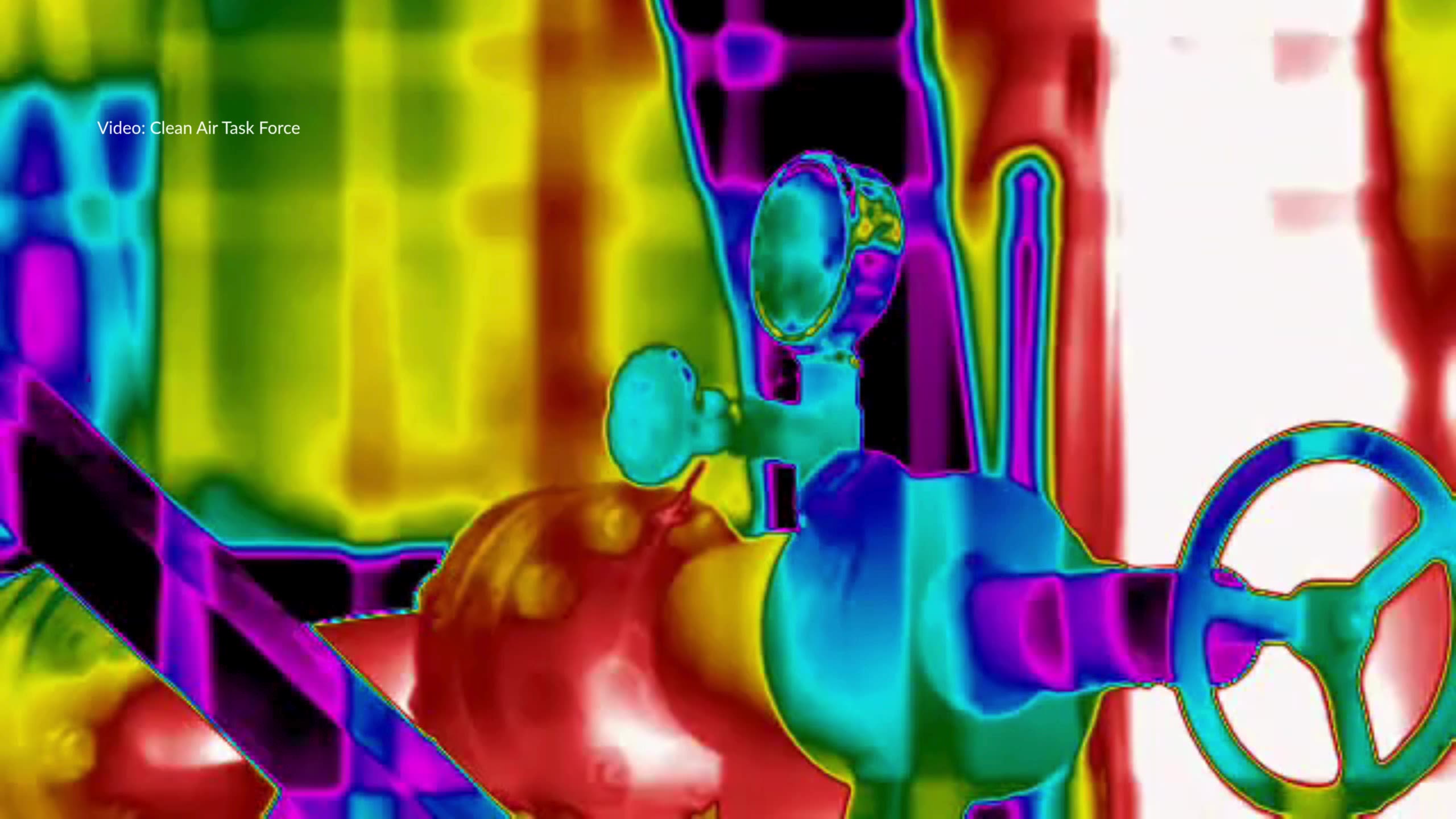
Quarterly inspections can cut emissions by as much as 80 per cent.
Here, a technician fixes a leak that has been found during a routine check.
What should government do?
The best way to cut methane emissions is to produce and use less oil and gas. The government should stick to its manifesto promise to phase out North Sea extraction.
It should also speed up progress on its commitment to a ‘low methane marketplace’, which will drive down emissions from imports.
But, for immediate impact, the forthcoming Energy Independence Bill should ensure all UK operators, onshore and offshore:
• measure, monitor, report and independently verify their methane emissions;
• stop routine flaring and venting by 2030 or earlier;
• run quarterly leak detection and repair programmes.
Green Alliance is an independent think tank and charity focused on ambitious leadership for the environment.
Writing is a medium of communication that represents language through the inscription of signs and symbols
 Built with Shorthand